Having streamlined logistics processes is becoming increasingly important for businesses to remain competitive. However, with a wide range of logistics solutions available, it can be challenging to understand the differences between them all.
Contract logistics companies, freight forwarders, 3PLs, and 4PLs all play an important part in optimising logistics functions and supply chains. However, they differ in terms of scope, assets, client relationships, and technology usage.
In this blog, we will explore what contract logistics is and how it differs from freight forwarding and 3PL/4PL logistics. We will also provide insight into when a business might choose to utilise contract logistics, 3PLs, or 4PLs to help improve their logistics operations.
What is contract logistics?
Contract logistics refers to the long-term outsourcing of customised logistics and supply chain management services to a specialist provider. Rather than handling only transport or freight, contract logistics covers a broader range of integrated services across the supply chain.
Explore our complete guide to contract logistics for more information.
Difference between contract logistics, freight forwarding, and 3PLs/4PLs
There are many similarities between contract logistics, freight forwarding, 3PLs and 4PLs, and it can be difficult to understand what differentiates them.
We have outlined the key differences between these different types of logistics solutions below:
Contract logistics vs freight forwarding
The main differences between contract logistics and freight forwarding lie in their scope and role within the supply chain.
Freight forwarding specifically focuses on the transportation of goods from one location to another. Freight can be transported in a number of ways, such as by ground transportation, air freight, and sea freight. Freight forwarders manage a range of transport-related operations, such as transportation booking and coordination, customs clearance, documentation, and compliance.
However, contract logistics companies help with the management of different logistics operations within the supply chain, such as warehousing, inventory management, order fulfilment, and distribution.
Contract logistics services are typically on a longer-term, contracted basis, whereas freight forwarding services are shorter-term and more transactional, operating on a shipment-by-shipment basis.
Contract logistics vs 3PLs
3PL logistics and contract logistics both involve outsourcing logistics operations to third parties, and are often confused as being the same thing. Whilst contract logistics can be considered a type of long-term 3PL partnership, there are distinct differences between the two.
Contract logistics companies usually focus on improving specific weak spots within a supply chain, whereas 3PLs provide a more comprehensive suite of logistics services.
Contract logistics solutions are typically tailored to meet their clients' individual needs and build long-standing relationships with clients, however 3PL services are generally more scalable and flexible, and can be a short-term or longer-term solution.
Learn more about 3PLs with our complete guide to third-party logistics.
Contract logistics vs 4PLs
Contract logistics and 4PLs differ in terms of their scope and amount of strategic involvement in the supply chain.
Whilst contract logistics providers focus on the operational execution of specific logistics functions, 4PLs approach their clients’ supply chain operations more strategically, working to oversee, coordinate, and manage the entire supply chain. This includes working closely with 3PLs, freight forwarders, and other third parties to create a fully integrated supply chain with end-to-end visibility.
Learn more about 4PLs with our expert guide.
Summarising key differences
|
Contract Logistics |
Freight Forwarding |
3PLs |
4PLs |
|
|
Scope |
Full execution of specific logistics functions |
Primary focus on the transportation of goods |
Offers a range of logistics services |
End-to-end logistics management and visibility across the supply chain |
|
Assets |
Owns assets such as warehouses, fleets, and equipment |
Typically relies on a network of carriers and logistics providers |
May or may not own their own assets |
May or may not own their own assets |
|
Relationship |
Longer-term, operational partnership |
Often offers short-term or one-time services, transactional relationship |
Shorter-term, service-based relationship |
Long-term, strategic partnership |
|
Technology |
Warehouse management system integration |
Transportation management system integration and tracking systems |
Basic operational tools |
Advanced technology and integrated platforms |
How to choose the right logistics option for your business
With so many different types of logistics solutions available, it can be a challenge to decide what would work best for your business.
The best solution for your business depends on a range of factors, including the type and size of business you run, your business’s operational needs, and goals for growth.
We have put together some guidelines to help you make that decision:
When should you use a contract logistics provider?
If you are running a smaller business and have the time and resources to take responsibility for some aspects of the supply chain, such as picking and packing orders, managing inventory, or maintaining warehouse space, contract logistics might be best for you.
For example, you might choose to work with a contract logistics provider to help you with shipping, as this can be complex, particularly when selling across international markets.
Businesses best suited for contract logistics might include:
-
High-volume retail and ecommerce businesses
-
Businesses with consistent, predictable demand
-
Businesses looking for dedicated fleets or warehousing solutions
-
Businesses looking to improve the efficiency and reliability of their supply chain
When should you use a 3PL?
If most of your time is taken up with marketing and running your business, and you lack the time and resources to take on logistics operations yourself, working with a 3PL might meet your needs the best.
3PLs are also great if you are looking to scale and grow your business. When you outsource logistics operations to a 3PL, you will have more time to dedicate to creating and implementing growth strategies.
Businesses best suited for 3PLs include:
-
Small to medium companies looking to grow
-
Businesses looking for help managing different logistics operations
-
Businesses with less-complex logistics needs
-
Businesses outsourcing operations for the first time
When should you use a 4PL?
A 4PL logistics partner would best suit larger, global enterprises that have complex supply chain needs. This is because 4PLs provide end-to-end supply chain visibility, management, and a strategic approach to optimising logistics operations.
Businesses that might be best suited to end-to-end supply chain integration include:
-
Businesses operating globally with international supply chains
-
Businesses requiring the integration of multiple third-party logistics providers
-
Businesses looking for end-to-end supply chain visibility
-
Businesses managing a complex supply chain and network of vendors
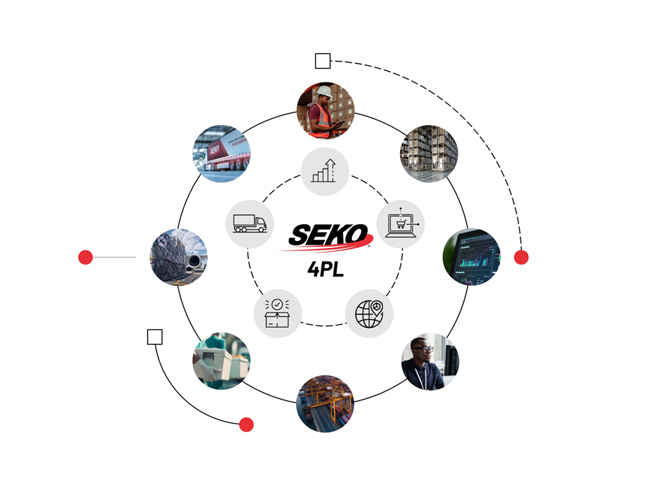
SEKO Logistics: Your Trusted, End-to-End Logistics Partner
SEKO Logistics provide a comprehensive range of end-to-end logistics services to businesses across a variety of industries.
From ecommerce solutions to value-added freight forwarding, our team of logistics specialists have extensive experience in streamlining operations and optimising supply chains. By utilising our global network and advanced technologies, we are dedicated to providing solutions that transform our clients’ supply chains and enable them to grow.
Unsure what kind of logistics solutions would be best for your business? Get in touch with our experts today to discuss your requirements.